The council of look-alikes: why power is shared by similarity, not skill
An owner who is finally ready to share power gathers a few people around him. They are not the most competent in their fields. They are the ones most like him: same pace of thinking, same number of deals carried, same language. The result looks like collective management and works like one person in several bodies.
By Andrey Belokrylov · October 26, 2026 · 9 min read

An owner who is finally ready to share power gathers a few people around him. He does not pick the most competent person in each field. He picks the people most like himself: those who think at the same speed, carry about as many deals as he does, and talk the same way. The circle that forms looks like a body of collective management. In practice it is still one person, now spread across several bodies.
This is a recognisable stage in the life of a company, and it follows directly from the one before it. In an earlier piece I described the founder who becomes the bottleneck, the moment when every decision has to pass through one signature and the flow of decisions outgrows what one person can handle. The council of look-alikes is the first answer to that crisis. It is a partial answer, and understanding why it is partial matters a great deal if you sell to such a company, partner with one, or advise it.
Power by a formal sign instead of competence
At this stage the dominant figure, the owner or founder at the centre, hands part of his power to a few deputies. The selection principle is formal rather than functional. He chooses several trusted people who are close to him in management style and in the volume of transactions they can push through. Together they form an informal coordinating council.
The council resembles an early board of directors. There is collegiality. Questions are distributed. What is missing is real functional specialisation. Nobody in the circle is responsible for finance, or production, or the market because of their expertise in that area. Each member is closer to a reduced copy of the owner than to the carrier of a separate competence.
The trust behind this arrangement is incomplete. The owner trusts these people because he recognises himself in them, and he has not tested them professionally. The crisis of trust from the previous stage has been worked through only halfway. Power is shared, but it is shared with reflections.
Getting bigger instead of getting deeper
This structure has an economic twin. When a company hits its transaction ceiling, the same throughput limit that choked the owner in the previous stage, the typical response is to enlarge the asset base rather than to rebuild processes. Companies buy other companies. Markets consolidate into oligopolies. Large corporate structures appear. Formerly independent dominant firms give way to a vertical of power running from the top down through the deputies.
This removes the symptom and leaves the cause in place. The system does not learn to distribute decisions by competence. It adds mass under the same type of management. The ceiling moves back for a while, and it moves because of scale, while the quality of the structure stays the same.
Here the story forks, and the fork shapes much of what follows.
If the market is indifferent to what the organisation actually does, if a company can keep growing simply by piling up assets and nobody gives it feedback on quality, fantasies and illusions set in. The council discusses strategy, but the discussion is less and less connected to any real request from the market.
If, on the other hand, demand is clear and supply is scarce, the organisation can grow quite genuinely by meeting that demand, and getting bigger works for a time as a healthy strategy.
The structure of the council is identical in both scenarios. The difference lies outside it: whether the environment sends enough signal to correct course in time, or whether the council simply stews in its own agreement.
Why this matters more in Russia than in a Western market
Readers from Europe or the US will recognise the idea of an inner circle. What changes in Russia is how often this stage defines the company you are actually dealing with, and how invisible it is from the outside.
In many Western markets, a company of meaningful size tends to have formal governance that is legible to an outsider: a board with defined roles, named function heads, procurement rules. You can read the org chart and roughly predict who will decide. Many Russian mid-sized companies are still owner-led, and when they start sharing power, the arrangement is often the informal council described above. The titles on business cards may say commercial director, finance director, head of development. The real question is how close each of those people is to the owner’s way of working.
This is my interpretation from practice, not a measured statistic, but it has a practical consequence. The org chart in such a company describes functions that the council does not actually divide. If you map your sale to the formal roles, you will talk to the right titles and still miss how the decision is made.
The second difference is the fork itself. A company that grew in a period of scarce supply may carry the habits of that period long after the market has changed. Its council may remember strategies that worked when demand was simply waiting to be met, and those memories feel like proof. A foreign supplier arriving with a product that requires the client to change a process is pitching to a body that has rarely had to change process to grow.
The one question that diagnoses the stage
If you are observing such a council from the inside or from the side, as a participant, a partner or a consultant, one question tells you more than any other. When the council discusses a proposal, does it argue about the substance of the matter, or mainly about how well the proposal fits the owner’s style?
While the second pattern dominates, the council remains an extended shadow of one person.
For a company selling into Russia, this question translates into something you can observe in meetings:
- Objections that track the owner. If every objection you hear sounds like a paraphrase of what the owner said in the first meeting, you are talking to the shadow, and the decision has already been framed.
- Questions about fit rather than results. “Will this suit how we work?” asked more often than “what will this change in our numbers?” points the same way.
- Silence between meetings. Members rarely move a proposal forward on their own initiative, because their role is to reflect the centre rather than to own an area.
None of this is a reason to walk away. It is a reason to prepare differently. A proposal for such a council has to pass the style test first. That means showing early that your product does not require the owner to give up control he values. Only after that test does the business case get heard.
The sign of movement: independence inside the council
The sign of development is the appearance of independence within the council. It is the moment when one of the trusted people starts defending a position that differs from the owner’s expectations, and grounds it in a professional argument rather than in personal loyalty.
From the inside such episodes almost always feel like conflict or disloyalty. In fact they are the first sign that the formal principle of selection is starting to give way to a functional one. The system is getting ready to move on, towards a real distribution of competences and areas of responsibility.
For an outside party this person is worth finding. A foreign company with a product built on substance, such as better analytics, a more efficient process, or a clearer offer, usually has more in common with the member who argues from expertise than with the members who argue from resemblance. That member will not carry the decision alone. But he or she is the one who can translate your case into terms the council will listen to, and the one whose standing grows as the company matures.
Be careful with this alliance. If you visibly side with a dissenting member against the owner, you turn a professional argument into a loyalty conflict, and the council will close ranks. The work is to give that person material that stands on its own: numbers, comparisons, a pilot with a clear measure. Then the argument stays about the matter.
What to do if you are building such a council yourself
The other side of the same idea applies to foreign companies that set up their own Russian subsidiary or local office. The pattern is not uniquely Russian. Any founder or country manager under pressure tends to fill the first management circle with people who feel easy to work with.
For anyone building a board, a management committee or any other collegial body at this stage of growth, the practical conclusion is concrete. Deliberately bring in people who are unlike the dominant figure. The aim is not a display of diversity. Dissimilarity is what produces the functional specialisation that a formal council lacks by definition.
In practice for a Russian operation this means:
- appointing at least one person whose job is to represent the market rather than the head office, and who has the standing to say a plan will not work locally;
- giving council members areas they own, so that disagreement has a professional basis instead of a personal one;
- checking whether the strategy discussion is still tied to actual signals from Russian buyers, especially in a niche where the company can grow for a while without much feedback on quality.
Resistance to this step is usually the signal that the organisation is not yet ready to take it. That is useful information in itself. If you are entering the market and need to know whether your local structure will hold up, a marketing session is a good place to test it before it hardens, and the broader plan for entering the Russian market has to take it into account from the first month.
A closing image
A council of look-alikes is like a choir where everyone sings the same part in unison. It sounds well rehearsed, but the song gets no richer as voices are added. Real polyphony begins when someone in the choir dares to take their own note and is not afraid it will sound different.
Frequently asked questions
What is a council of trusted people in a Russian company?
It is an informal circle the owner forms when one signature can no longer carry the flow of decisions. Members are picked because they resemble the owner in management style and in the volume of work they can handle, rather than for a specific expertise. It may look like a board or a management committee, yet it has no real division of functions inside it.
How is this different from a Western board of directors?
A Western board is usually a formal body with defined roles, and often with members brought in precisely because they think differently from management. The council described here is informal and assembled by similarity. Its members are smaller copies of the owner, so the circle adds capacity without adding a second point of view.
As a foreign supplier, whom should I persuade in such a council?
Start from the owner's style, because the council tests every proposal first against that style. Then look for the one member who argues from professional reasoning and is willing to disagree. That person is the earliest sign the company is moving towards real specialisation, and the most likely internal ally for a proposal built on substance.
Is growth by acquisition at this stage a warning sign?
Not by itself. If demand in the market is clear and supply is scarce, getting bigger can be a sound strategy for a while. The risk appears when the environment gives no feedback on quality and the company can grow by adding assets alone. Then the council's strategy talk drifts away from what the market actually asks for.
Sources
- Russian version of this article on belokrylovo.ru: Совет доверенных: власть делят не по силе, а по похожести
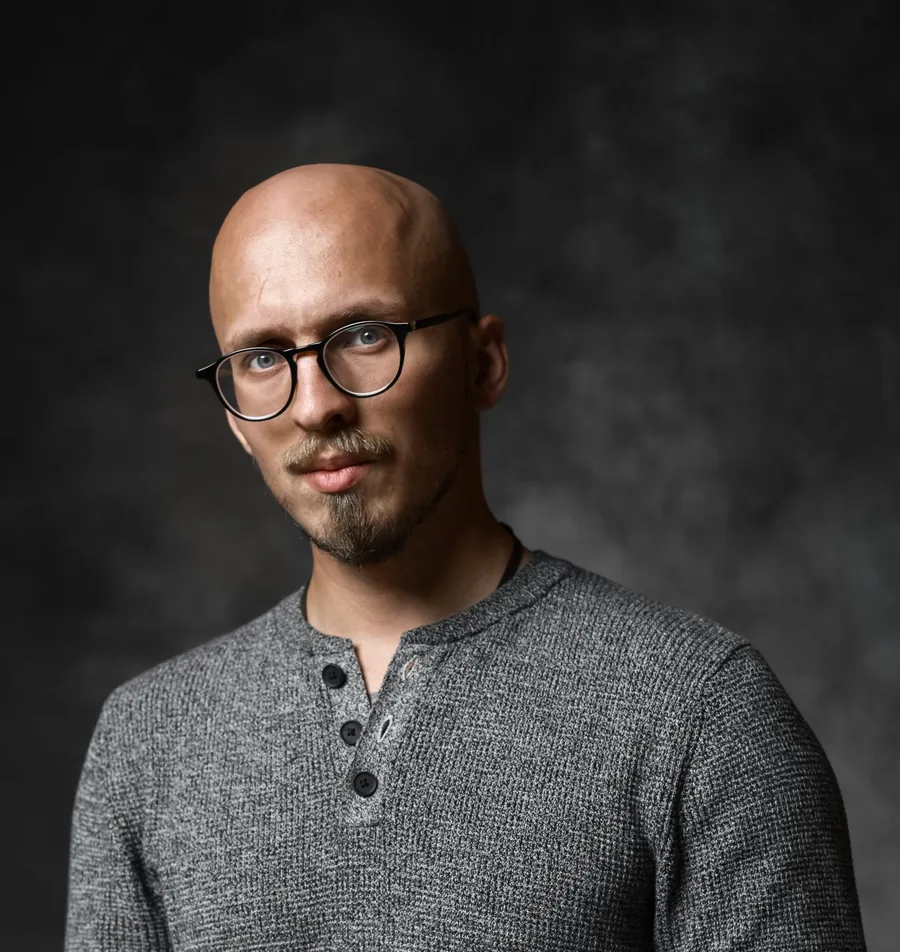
Independent marketing strategist and digital marketer. 10+ years, 100+ projects, from Marriott to small restaurants. I write about how Russian customers decide and how to run Yandex, VK and Avito without wasting the budget. More about me